Some interesting questions came into the N.C. Cooperative Extension, Caldwell County Center this week, and I’d like to share three of them with you. I hope you find these questions and their answers helpful. If you have a specific question not answered here, please contact the Caldwell County office.
That's not a Murder Hornet?
(Updated: April 12, 2021, 11:06 a.m.)
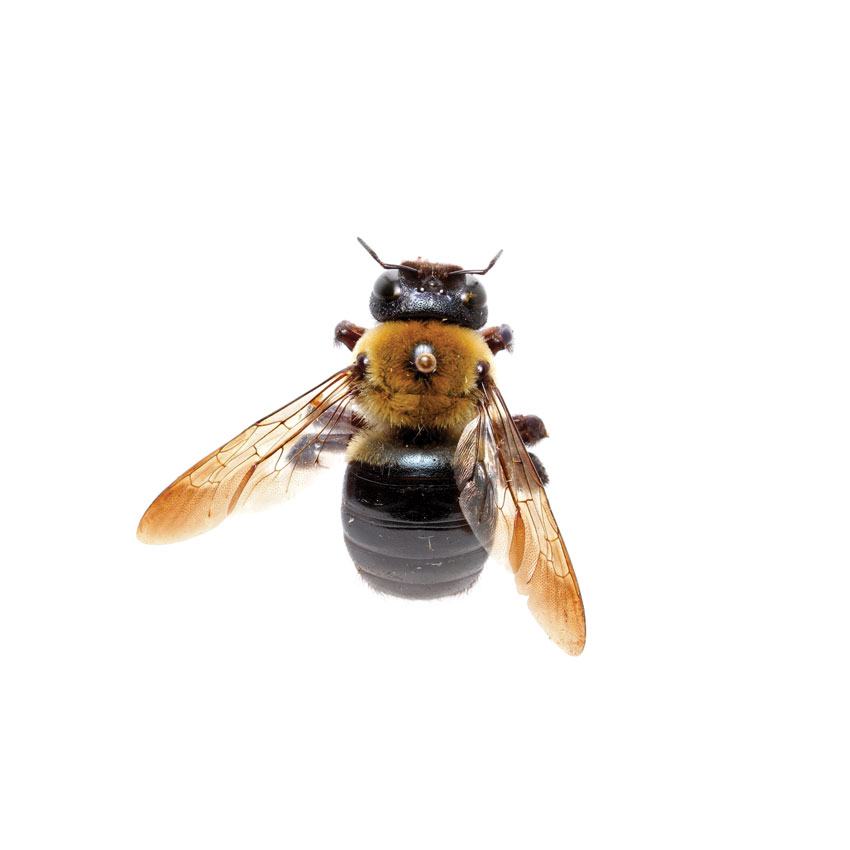
Q: There are huge yellow and black insects flying around my home. Could these be a murder hornet?
A: There has been a lot of media buzz about “murder hornets”, better known as Asian giant hornets (Vespa mandarinia). The media labeled them “murder hornets” because they like to feed on and “murder” honey bees. In the United States, these hornets have only been found in Washington State. Also, as of 2019-2020, established colonies and individuals were eradicated. Federal agencies are continuing to monitor for new introductions of these hornets.
Huge black and yellow insects flying around now are most likely carpenter bees. These big buzzy insects are swooping and hovering around looking for good nesting sites. They nest in wood by chewing a perfectly round hole on the underside of exposed wood. They do not eat wood, so insecticides sprayed on wood do not provide effective control. Spraying bees as they are hovering is not practical or safe. Our best recommendation for control of bees that are hovering around is a tennis racket.
Also, be sure to look for nesting holes. Treat the holes with carbaryl (Sevin). Caulk the hole 24 to 36 hours after treating. Caulking without spraying is ineffective because bees will just tunnel out somewhere else. It is important to caulk so the nesting holes/tunnels will not be used again next year. When using any pesticide, always read and follow the labeled directions.
Q: How can I protect my house from being damaged by woodpeckers?
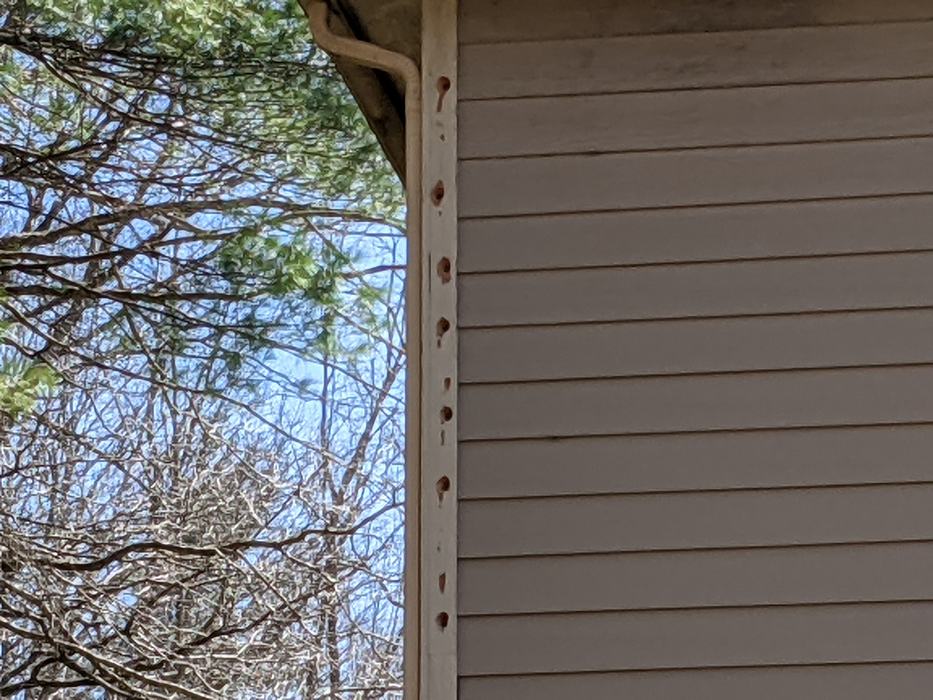
A: Woodpeckers can do a lot of damage to homes. Cornell University studied the most effective control measures to discourage woodpeckers. They found that a reflective film marketed as Irri-tape was most effective at discouraging the woodpeckers. The other important thing learned from the study was that earth-tone colored homes were twice as likely to suffer damage as pastel or white colored homes, regardless of their siding type.
Q: I just got a mini-donkey. What shots does it need?
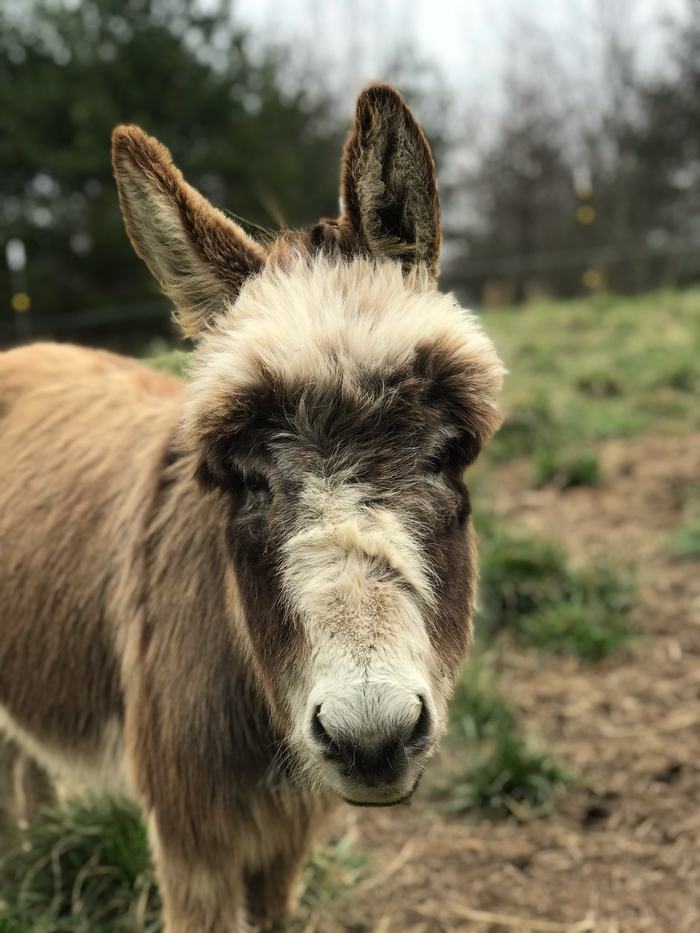
A: State Veterinarian Dr. Doug Meckes recommends equine owners talk to their veterinarians about an effective vaccination protocol to protect horses from mosquito-borne diseases. The two mosquito-borne diseases of most concern are Eastern Equine Encephalomyelitis (EEE) and West Nile virus (WNV). To fully protect the animals requires two injections for horses, mules, and donkeys that have no prior vaccination history.
Eastern Equine Encephalomyelitis causes vision problems, aimless wandering, head pressing, circling, inability to swallow, irregular staggering gait, paralysis, convulsions, and death. Once a horse has been bitten by an infected mosquito, it may take three to 10 days for symptoms to appear.
Symptoms of WNF include fever, weakness or paralysis of hind limbs, impaired vision, head pressing, seizures, and aimless wandering.
Last year (2020), there were nine recorded cases of EEE in North Carolina.
Besides mosquito-borne diseases, rabies is another concern for equines. Consult your veterinarian for advice about your animals. If you do not have a veterinarian, reach out to Dr. Brett McCaskill (Ascent Veterinary Health: Mobile Veterinary Services PLLC). He is the only large animal veterinarian based in Caldwell County.
Seth Nagy is the Extension Director in Caldwell County. The N.C. Cooperative Extension, Caldwell County Center, 120 Hospital Ave. NE #1 in Lenoir, provides access to resources of NC State University and N.C. A&T State University through educational programs and publications.
Join our mailing list!
Enter your email address to receive updates.
Written By