Fall armyworms are in Caldwell County and are causing significant damage to many lawns. These insects can attack many turf species like bermudagrass, fescue, ryegrass, and bluegrass. Damage is more likely where the turf has been mechanically disturbed (newly-placed sod, areas of construction) or in areas that have been seeded within the last year. Unlike a lot of other turf insects, fall armyworms can be seen crawling across the turf surface during the day. These caterpillars are easily recognized by an upside-down “Y” marking on their head capsule.
Special Pest Alert - Fall Armyworms
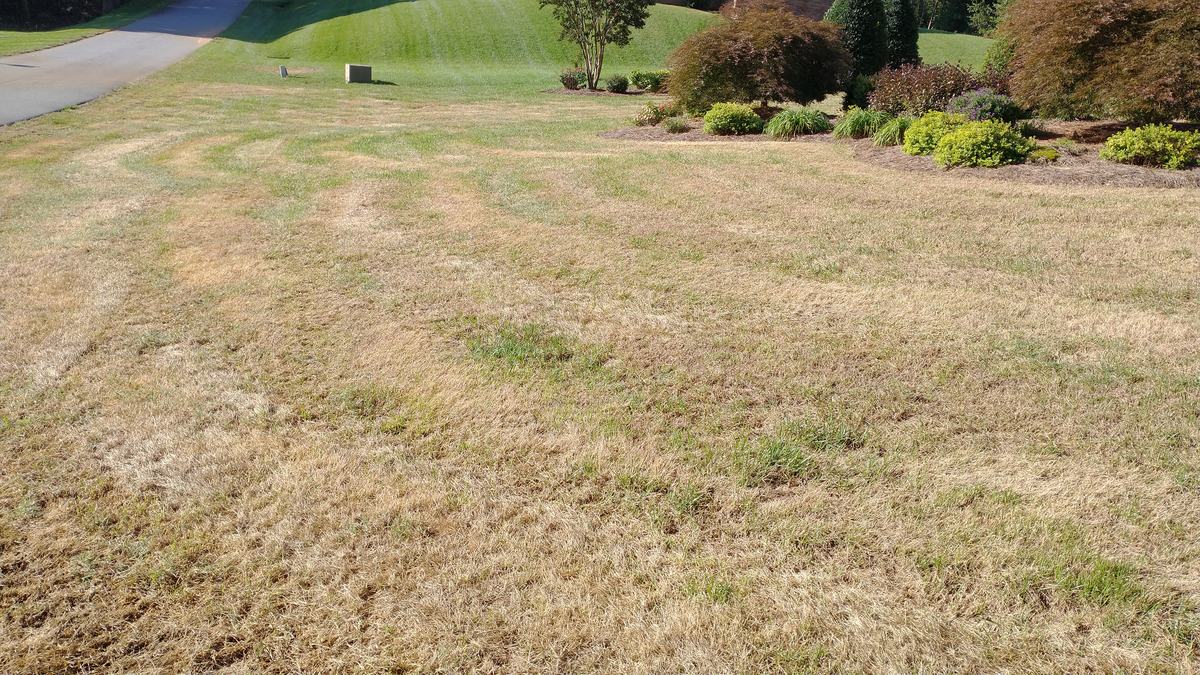
This is only the second time in 22 years that I have seens fall armyworms in Caldwell County. These insects do not overwinter in North Carolina. The cycle begins when adult fall armyworm moths hitchhike from the Gulf coast on hurricanes or tropical storms. The female moth lays around 1,000 eggs in masses of 50 or more. The eggs are typically laid on vertical structures such as houses, shrubs, trees, fences, or mailboxes. The small caterpillars hatch from their eggs and set out in search of food, devouring what is in their path.
Often by the time fall armyworm damage is noticed, the caterpillars have finished feeding and have moved into the soil to pupate (transform into an adult). Treating at this stage is ineffective. However, if the damage is noticed quickly enough, a treatment can be somewhat effective. Pyrethroids (particularly lambda-cyhalothrin) and carbamates (carbaryl, often sold as Seven), will provide effective control against smaller larvae.
Established bermudagrass lawns may recover from fall armyworm feeding damage. Fescue lawns will most likely need to be reseeded, especially if the damage coincides with hot, dry conditions.
For more information visit Fall Armyworms in Turf
Join our mailing list!
Enter your email address to receive updates.
Written By