Many kids excel at creating dirty laundry; yet when they are old enough to do laundry for themselves, they may not be set up for the same success.
Laundry is an inevitable chore, and youth learn about decision-making, responsibility and independence when they do their own laundry. Adults teaching youth about the laundry process, should consider youth interests.
For example, if youth are environmentally conscious, going green in the laundry room is easier than one might think. Waiting until youth have a full load of laundry saves water and reduces gas or electrical energy compared to running partial loads. Another way to conserve resources is to purchase concentrated products, reducing packaging and saving transportation energy costs.
For young mathematicians, calculating cost per load or cost per wear of clothing items puts laundry in a new light.
Learning about laundry can also help youth look their best. Fashionistas will be interested to learn about fabric care. There are many types of fabrics used to make clothing, bedding and other washable items. Some are breathable. Some are durable. Some are odor resistant.
Have youth reflect on how different fabrics serve different purposes and learn about where each comes from. They can be classified as made of natural fibers, synthetic fibers or maybe a blend of the two.
Hands-on experiences will impact how youth learn new laundry skills.
Families can use an old article of clothing to perform their own product tests on stain removers or detergents. Other ideas are to have an organization contest with clean clothes and plan a scavenger hunt for items with different care labels around the home.
When any young person starts doing their own laundry, safety information should be covered. Injuries and accidents related to laundry are almost always preventable. Cleaning products should be stored safely and their product labels should be read. If using a dryer, frequently cleaning the lint trap helps prevent fire hazards.
For more ideas about teaching youth how to succeed with laundry, contact 4-H Youth Development Agent Sarah Kocher at sarah_kocher@ncsu.edu. Copies of “The Laundry Project,” a 4-H project book created by Ohio State University Extension, are available at the N.C. Cooperative Extension, Caldwell County Center.
Caldwell County 4-H is a member agency of United Way, and it enthusiastically supports its partnerships.
Sarah Kocher is the 4-H Youth Development Agent with N.C. Cooperative Extension in Caldwell County. The N.C. Cooperative Extension, Caldwell County Center, 120 Hospital Ave. NE #1 in Lenoir, provides access to resources of NC State University and N.C. A&T State University through educational programs and publications.
Photo captions
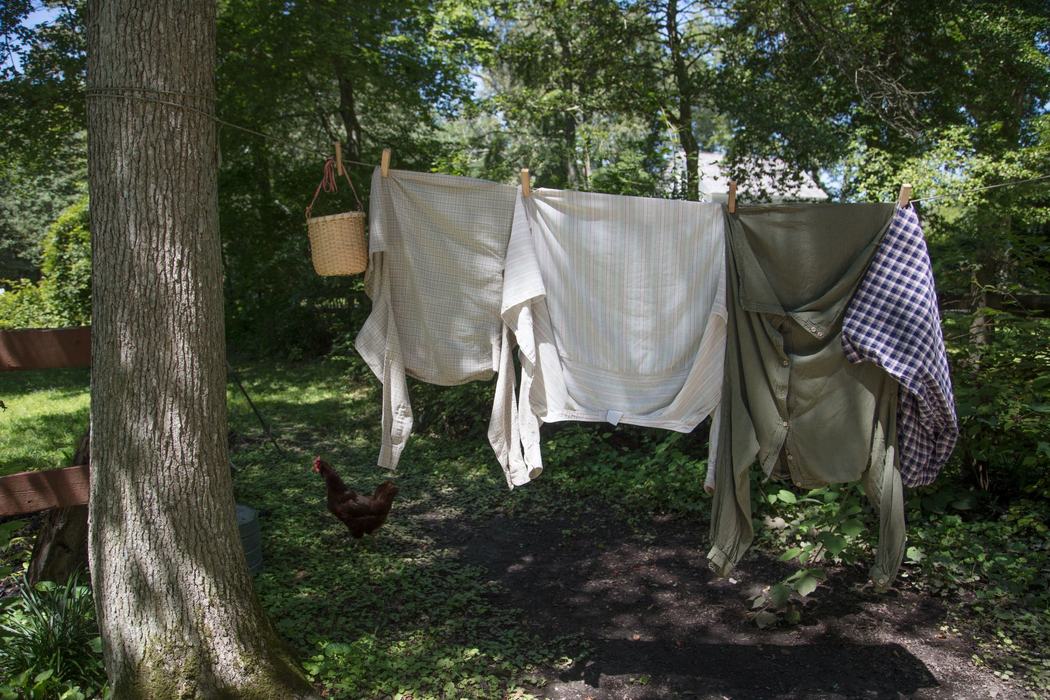
hang-to-dry.jpg (Photo courtesy of Library of Congress, photographer Carol M. Highsmith): Laundry hangs to dry in Cape May, New Jersey. When weather permits, environmentally conscious youth can hang their clothes to dry, saving gas or electrical energy.
The Laundry Project.png (Photo courtesy of Ohio State University Extension): “The Laundry Project,” which is a 4-H project workbook, walks families through a variety of laundry considerations, including fabric care, laundry product testing, and safety.