Ladybug, Yellow Jackets, and Sowing Grass Seed Solutions
(Updated: Oct. 11, 2021, 11:17 a.m.)
Several interesting questions came into the N.C. Cooperative Extension, Caldwell County Center this week. I’d like to share three of the questions with you. I hope you find these questions and answers helpful.
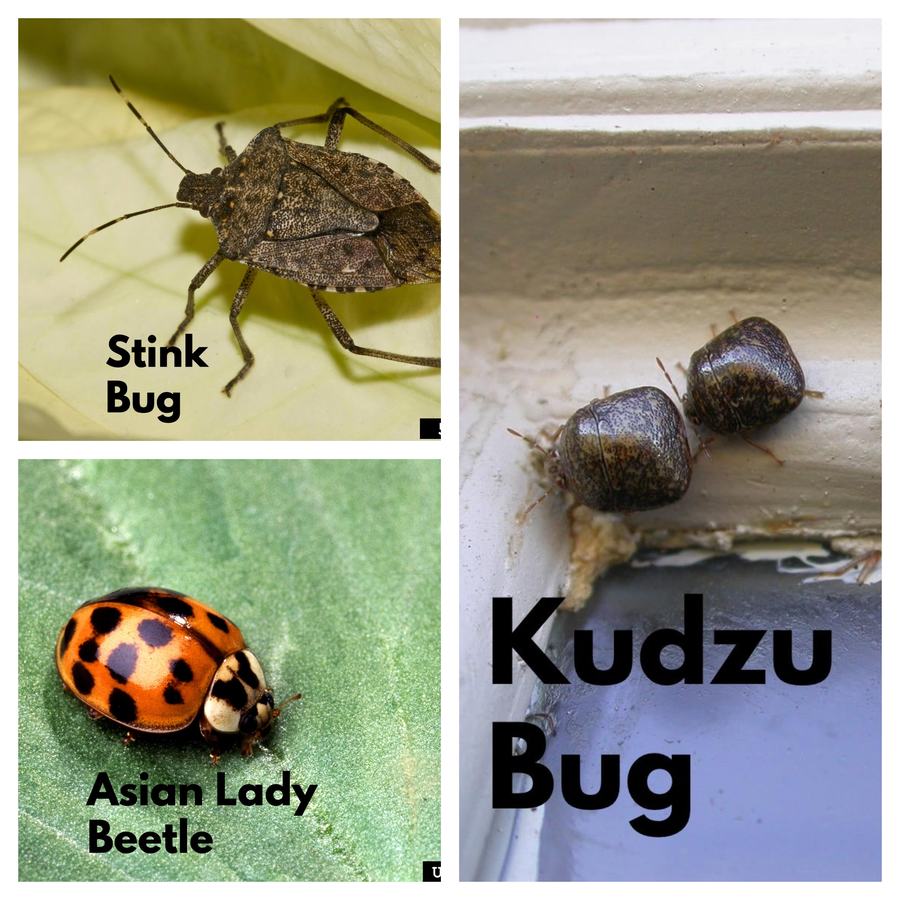
Question: What can I do to prevent ladybugs from getting into my house?
Answer: As the weather gets cooler, lady beetles, stink bugs, and kudzu bugs will all be looking for a place to survive the winter. If you don’t want to share your house with these critters, then the emphasis should be on exclusion. I don’t recommend using a preventive spray as your first line of defense. Exclusion is the way to keep these insects out.
Exclusion means plugging holes that the bugs can use to enter your home or business. Use caulk to fill any gap around windows, doors, etc. After sealing up cracks & crevices, you should see an added benefit - a reduction in your heating and cooling bill.
Question: When seeding bare spots in my lawn, how much straw should I use?
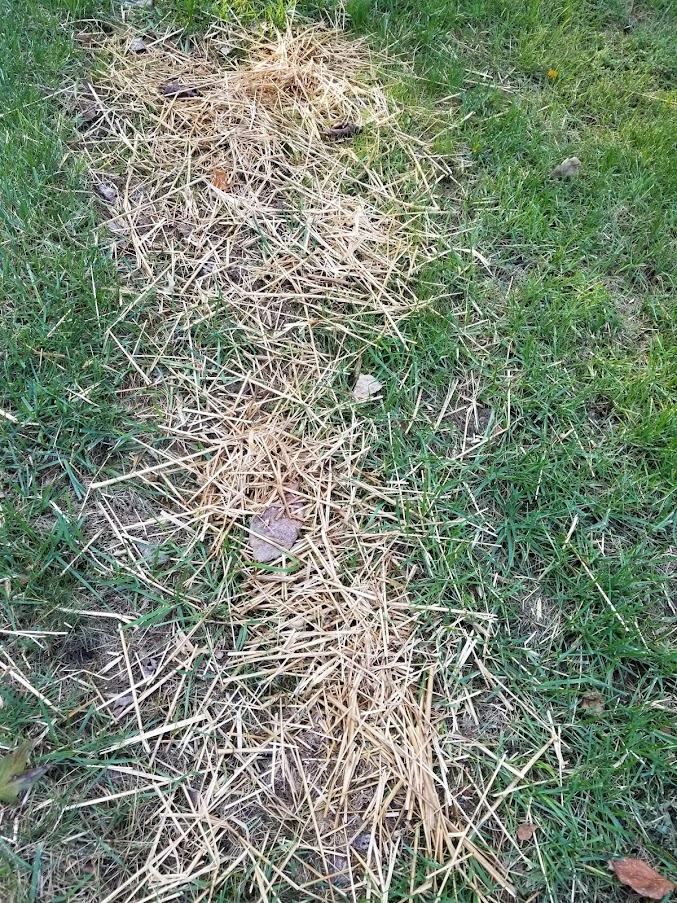
Answer: One bale of straw should cover about 1,000 square feet. It is possible to apply too much straw. Too much straw shades seedlings. You've got the right amount when you can see 20 - 50% of the soil through the straw layer.
Weed free straw improves germination and early seedling survival by helping hold moisture in the soil. However, too much can be detrimental. If you can't see the soil below the straw, then too much has been applied. (Credit: Darrell Blackwelder)
Question: There are yellowjackets in the ceiling of my carport. How can I control them?
Answer: The first decision to make is whether control is actually necessary. In spite of their reputation, yellowjackets are actually beneficial. They prey on many insects that we consider pests. They also serve as food for bears, skunks, birds, and other insects.
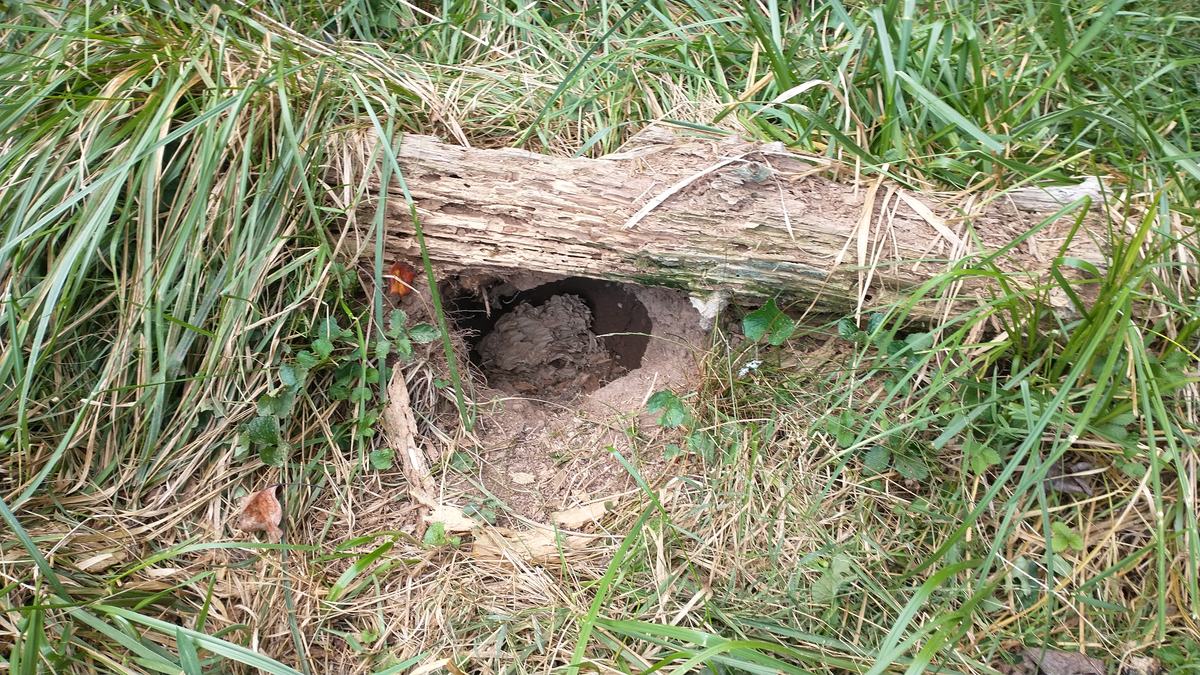
This yellow jacket nest was likely food for a bear or skunk. (Credit: Seth Nagy)
However, when yellow jackets make a nest in your carport, I typically suggest treating them. The only exception to this is when it is mid-September or later in the year. Unlike honey bees, yellow jacket colonies die out each year. Right now it is easiest to simply wait until the colony dies out for the winter.
If this were earlier in the year, JJ I would suggest purchasing a product labeled for wasp, hornet, and/or yellow jacket control. These “hornet & wasp” sprays are in a large aerosol can and can spray a stream of insecticide 20 feet or more. Follow all label directions.
Treat the colony in late evening when all foragers have returned to the colony. The colony entrance should be identified and marked during the day. These aerosol sprays provide a quick knockdown, which is preferred because yellowjackets may fly out to defend the colony when disturbed. Yellowjackets are attracted to light at night, so do not hold a flashlight while applying an insecticide. Direct the insecticide dispenser nozzle toward the nest entrance. Check the colony entrance the next day for activity and reapply again if necessary.
For answers to your agriculture questions, call the N.C. Cooperative Extension, Caldwell County Center at 828-757-1290 or visit us online anytime.