Some excellent questions came into the N.C. Cooperative Extension, Caldwell County Center this week, and I’d like to share three of them with you. I hope you find these questions and their answers helpful. If you have a specific question not answered here, please contact the Caldwell County office.
Q: When should I fertilize my fescue lawn?
A: Tall fescue is a cool-season grass. It does its productive growth in the spring and fall. For this reason, fertilizer applications should be concentrated in the fall, winter, and early spring. To keep it simple, just remember to fertilize on Valentine’s Day, Labor Day, and Halloween.
The amount of fertilizer to apply can be determined by a soil test. Soil testing kits are available at the Caldwell Extension Center. If you do not have a current soil test, look for fertilizer with a ratio of 3-1-2 or 4-1-2, such as 12-4-8 or 16-4-8.
Q: What are the pretty yellow spring flowers I see in pastures?
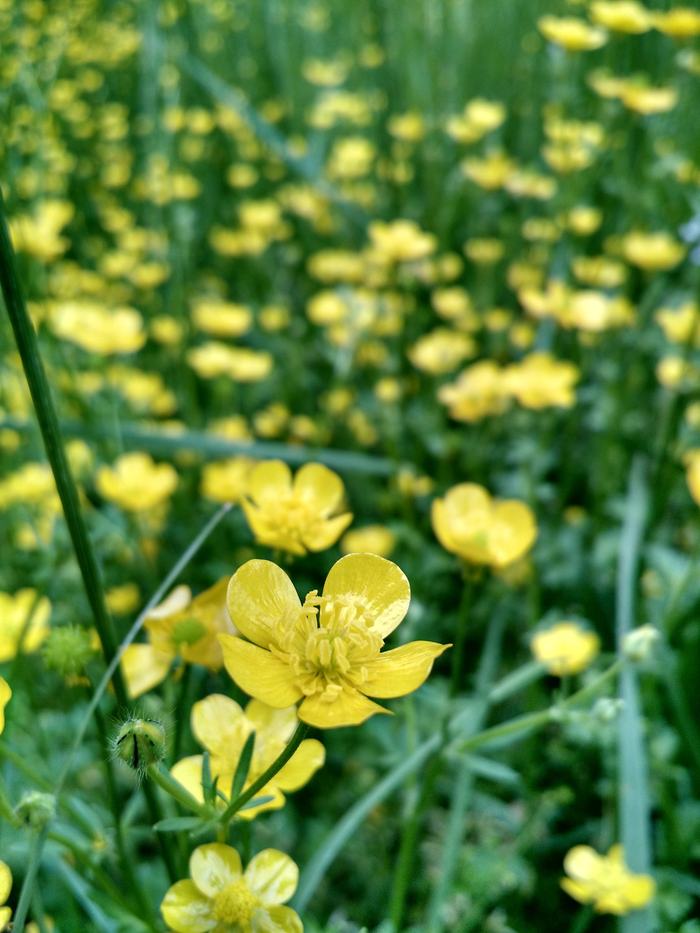
From a distance, these yellow flowers look like a carpet. Up close, the flowers are just as striking. However, these pretty flowers are a sign of an unproductive pasture.
A: Yellow pastures in the spring are a telltale sign of buttercups. We have both hairy and bulbous buttercup in Caldwell County. Although they can be differentiated, they are very similar. These yellow flowers are pretty to look at, but they are a sign of an unproductive pasture system. Grazing animals (cattle, horses, sheep, goats, or llamas) do not eat buttercups.
Buttercups are winter annuals. Annuals grow from seed each year. Winter annuals sprout in the fall, grow during the winter, and flower in the spring, making seed before dying in the heat of the summer.
When pastures are grazed short in the fall, it exposes the soil surface to sunlight. Sunlight is necessary for buttercup seed to germinate. I recommend controlling buttercup with the broadleaf weed killer 2,4-D ester. The best time for control is late winter before the buttercups bloom and have a chance to crowd out the grass. A targeted spray on a warm day in January or February gives excellent control. When using pesticides, be sure to always read and follow the labeled directions.
Q: Can groundhogs really predict the weather?
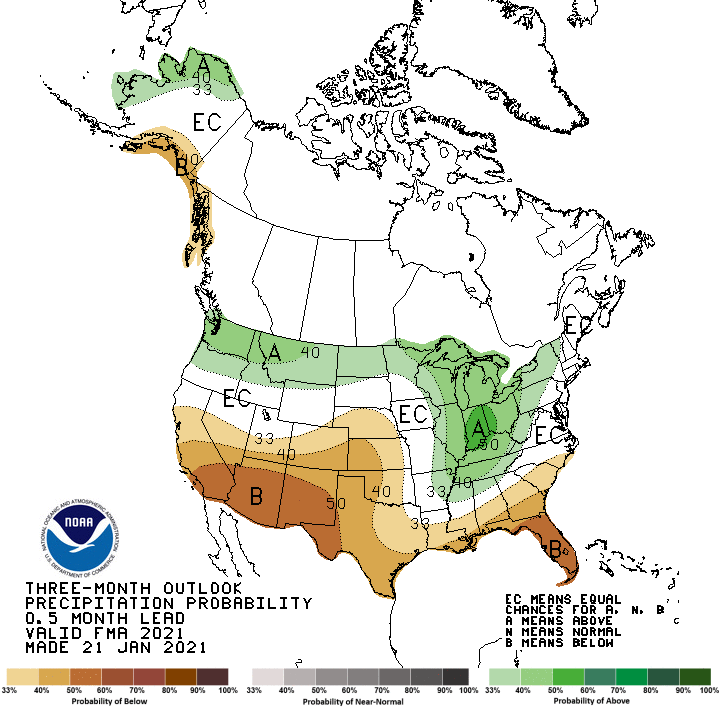
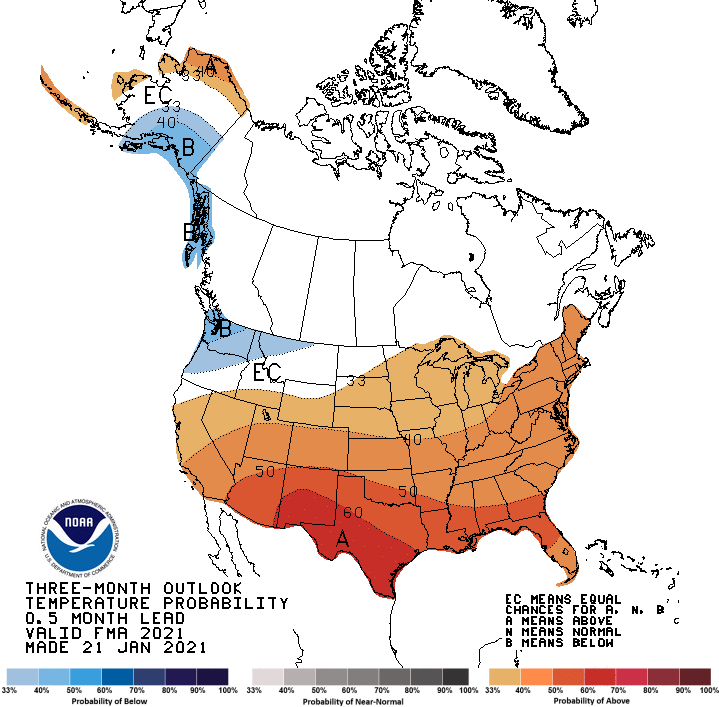
A: I think of groundhogs and Groundhog Day as a fun way to forecast the weather. However, NOAA (National Oceanic and Atmospheric Association) is a more reliable source for long term weather predictions. The current prediction for February, March, and April 2021 is above average temperatures and an equal chance of above or below-average precipitation. For additional long term and seasonal predictions, visit the Climate Prediction Center.
For answers to your agriculture questions, call the N.C. Cooperative Extension, Caldwell County Center at 828-757-1290 or visit us online any time.
Seth Nagy is the Caldwell County Extension Director. The N.C. Cooperative Extension, Caldwell County Center, 120 Hospital Ave. NE #1 in Lenoir, provides access to resources of NC State University and N.C. A&T State University through educational programs and publications.