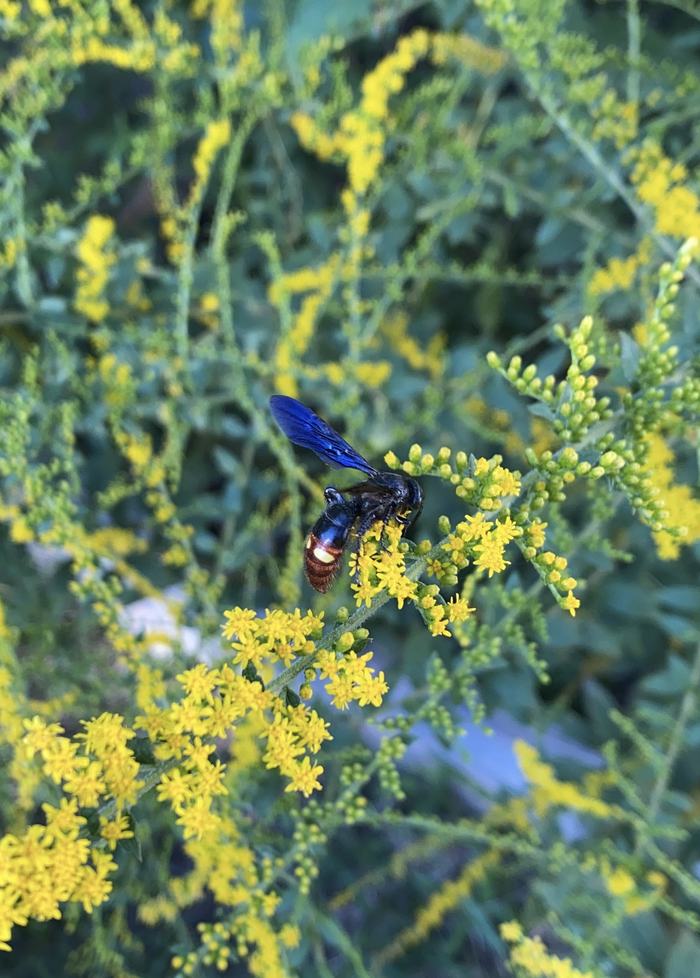
While many may regard wasps as mere nuisances, the scoliid wasps are winged critters that are worth becoming familiar with. These often-overlooked insects are playing a crucial role in maintaining the health and balance of lawns across the state.
Scoliid wasps, a diverse group of solitary wasps, are gaining attention for their natural pest control abilities. Being solitary wasps, they do not sting humans. These wasps primarily target the larvae of scarab beetles, which include notorious pests like Japanese beetles and June bugs. Scarab beetle larvae (grubs) are known for causing significant damage to lawns by feeding on grassroots, leading to brown patches and weakened turf.
Scoliid wasps are beneficial predators that help keep scarab beetle populations in check. Their presence can reduce the need for chemical pesticides, contributing to a more environmentally friendly and sustainable lawn care approach. This, in turn, can save a homeowner a substantial amount in lawn care costs.
The life cycle of scoliid wasps revolves around scarab beetle larvae. Female scoliid wasps actively search for these larvae, often flying a couple inches above your lawn, because the larvae are found just below the soil surface. Once located, the wasp paralyzes the larva with its sting and lays an egg on it. The wasp larva then feeds on the paralyzed scarab beetle larva, ultimately killing it. This act of predation not only helps control pest populations but also provides the scoliid wasps with a reliable food source for their own development.
Homeowners and lawn enthusiasts are being encouraged to recognize and appreciate the presence of scoliid wasps in their lawns. Instead of panicking at the sight of these wasps, take a step back and consider the benefits they bring. If you see these wasps in your lawn, it's a sign that a natural balance is being maintained. Avoid using broad-spectrum pesticides that could harm beneficial insects like these.
The most common scoliid wasp (Scolia dubia) can be identified by its distinctive black body with yellow markings on the abdomen, and its iridescent, blue wings.
If you are wanting to attract these beneficial wasps, try adding some golden rod (Solidago rugosa 'Fireworks') and/or mountain mint (Pycnanthemum spp.) to your landscape. Scoliid wasps (and other beneficial insects) are attracted to these specific, native plants.
Scoliid wasps should be a welcomed guest into your lawn and landscape. Their role as predators of soil-dwelling pests, coupled with their pollination efforts, highlights their vital contributions to maintaining both agricultural productivity and the balance of local ecosystems.