Spring is a great time to establish new plants! If you are thinking your landscape needs an update, or you want to add some beauty to your home, or whatever your reason, now is the time. I want to focus on pollinator gardening. It is popular right now (for good reason), it is something every homeowner can do successfully, and it is something our pollinators need!
When discussing pollinators, you usually see other buzzwords with it. Buzzwords like, sustainability, conservation, and native planting. It is because our pollinators play such an important role in all of these things. Traditionally, plant choices were made solely based on how “pretty” they were and we never put much thought into the roles they played in our local ecosystems.
Traditional landscapes are usually filled with ornamental plants that aren’t native to our area. This, in turn, does not attract or feed our pollinators because they aren’t “familiar” with these plants. Which then disrupts our local ecosystem because our plants and insects aren’t interacting as they should be.
With pollinator gardens, we want to attract and feed pollinators. About 90% of insect herbivores are host-plant specialists that are restricted to eating one or just a few plant lineages, according to “On the Evolution of Host Specificity in Phytophagous Arthropods” written by E. Bernays and M. Graham in 1988. So, plant choice matters! This is where the buzzword “native” comes into play. Pollinator plants are wonderful, but native pollinator plants are even better!
Native pollinator plants are important because not only are those the plants our pollinators know, they also establish fairly easily because they are indigenous to this area and are familiar with our soil type, climate, etc.
You may be thinking, “How do I know what is native to my area and if it will feed pollinators?” Well have no fear, there are plenty of resources out there to help guide you! Listed below are some keystone species that will look great in any landscape or garden and pollinators will love!
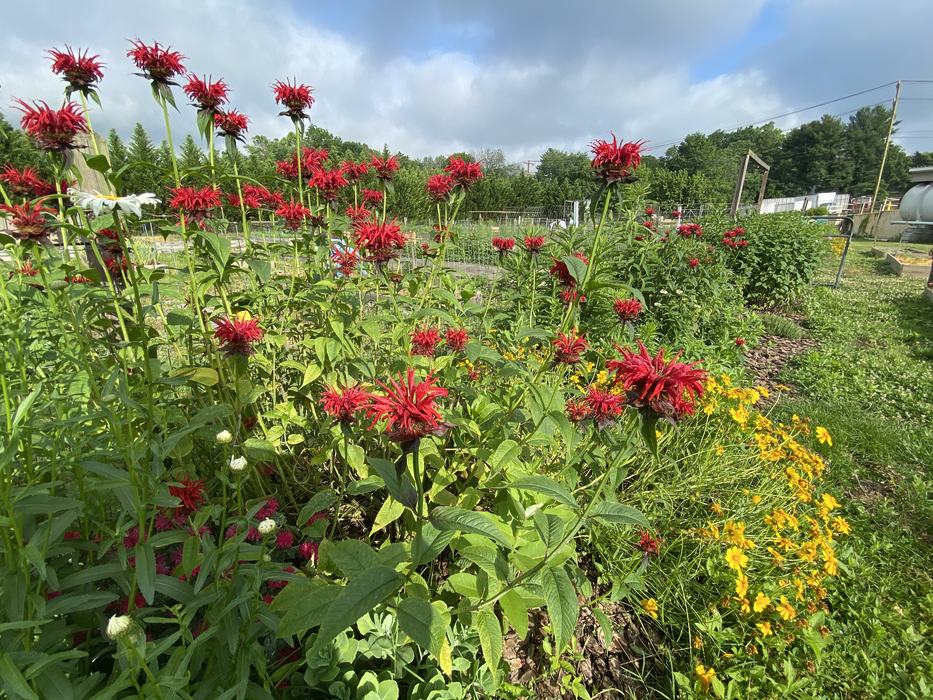
Let’s start with perennial flowers. Rudbeckia/Black-eyed susans, Echinacea/Coneflower, Asclepias incarnata/Swamp milkweed, Solidago rugosa/Golden rod, Heliopsis helianthoides/False sunflower, Monarda didyma/Bee balm and Vernonia noveboracensis/Ironweed just to name a few. Any of those listed will give you a pop of color while also keeping your pollinators happy and full!
Maybe you are tired of looking at your boxwoods, Nandinas or other common shrubs. You can replace those with beautiful flowering, native shrubs! Kalmia latifolia/Mountain Laurel have many different varieties of flower colors. Hydrangea quercifolia/Oakleaf hydrangea also have a range of colors to choose from. If you want a show stopper, check out the Physocarpus opulifolius ‘Summer Wine’/Ninebark. It has unique colored leaves and flowers! Replacing sterile, ornamental shrubs with these suggested shrubs will not only liven up your landscape, but it will help restore our local ecosystems that have been disrupted by non-native plant species.
Do you have a shady spot in your lawn? Maybe a bare spot under trees? Grass is hard to establish in shade. Replace those shady areas of lawn with some native ferns! Ferns pair great underneath trees and add rich color and texture to your landscape. Osmunda cinnamomea/Cinnamon fern and Dennstaedtia punctilobula/Hay scented fern are a couple to look for.
What do ferns offer for pollinators since they aren’t a flowering species? Well, pollinators include more than just bees. From a wildlife point of view, ferns can give structure that provides foraging space and shelter for ground-feeding birds. Other critters, like frogs and turtles, will use them for hiding spaces from prey. Ferns can also provide a place for butterflies to finish out their life cycle.
Pollinator gardening is one of those things where a small act makes a huge difference! North Carolina has an impressive 469 species of native birds, 500 species of native bees, and 175 species of butterflies. Just to name a few reasons to start your very own pollinator garden this season!
For more plant choices and information check out NC State Extension’s publications on “Butterflies in Your Backyard,” “Landscaping for Wildlife with Native Plants,” and “Pollinator Gardening for the South.” You can also call the N.C. Cooperative Extension, Caldwell County Center at 828-757-1290 or visit us anytime online.
Sources:
Pollinator Gardening for the South