Container gardening is a great option for many reasons. You can turn your front porch, back deck, sunroom, etc into a producing garden. Selecting the right containers, planting media, and plant combinations are the first steps in creating a successful garden. We hope this publication acts as a guide for you when carrying out your own container garden.
Container Gardening 101
(Updated: Dec. 18, 2024, 4:44 a.m.)
Selecting a container
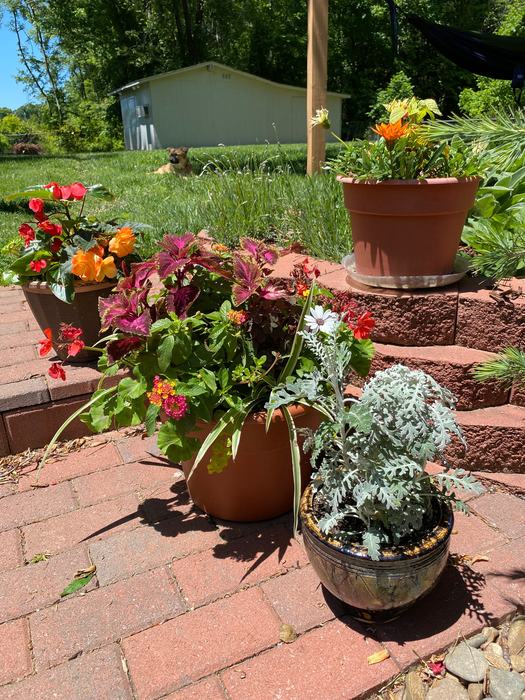
Almost any type of container will work as long as it has drainage holes.
Wood, clay, and unglazed ceramic containers will lose moisture more quickly and will, therefore, require more frequent watering than plastic, metal, fiberglass, or glazed pots. This is also true for small or dark-colored containers.
Selecting plants
Most vegetables and herbs will do well in containers but your cucumbers, squash, and tomatoes are heavy feeders that will require extra nutrients in order to produce healthy fruit.
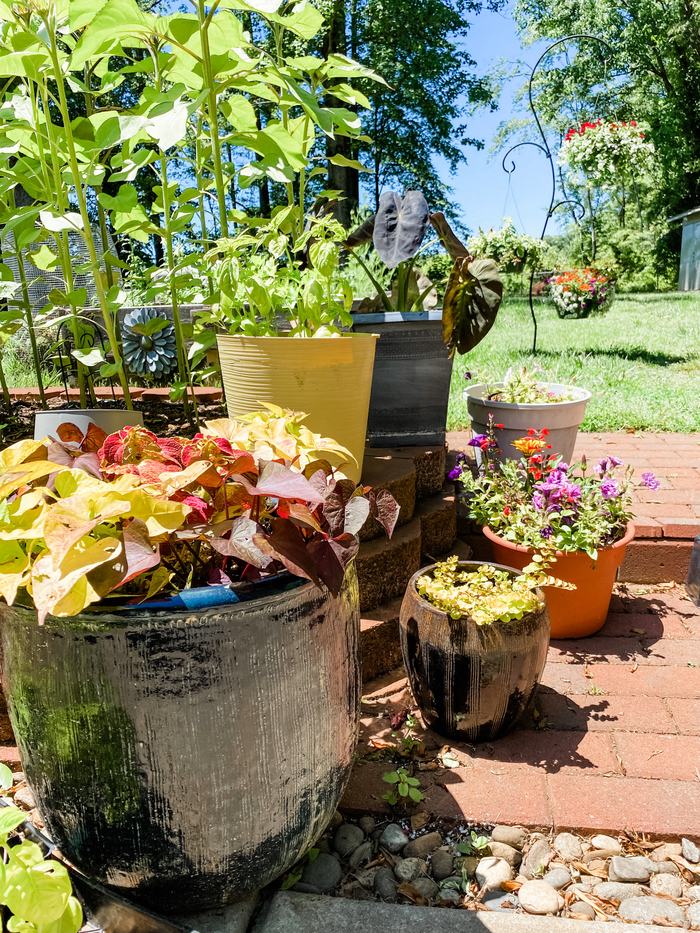
Selecting pots and plants with design in mind.
Plants can be grouped in containers based on:- Harvesting time—spring, summer, or fall crops
- Form—round, horizontal, oval, upright, or trailing
- Size—small plants in front and underneath and large plants above and behind
- Texture—coarse (stout stems, large leaves, big fruit), medium, or fine (dainty leaves, wispy stems, tiny flowers)
- Color—of flowers, leaves, or fruit
- Ingredients for favorite recipes to create a themed garden—Mexican, Italian, Mediterranean, or Asian
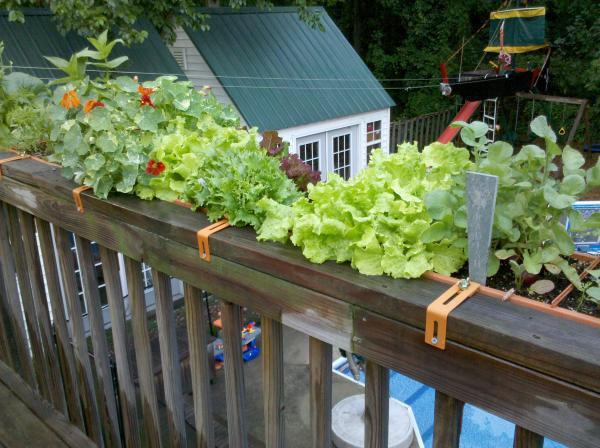
- Grow on a balcony, deck, or entrance area. (easy access area with sun)
- Use containers that have drainage holes
- Avoid small and dark-colored containers
- Use planting media, not garden soil
- Group plants together that have similar requirements of sun, water, and nutrients
For more in-depth details and steps visit this link: https://go.ncsu.edu/container-gardening
Join our mailing list!
Enter your email address to receive updates.
Written By