This spring, some pastures in the county will turn a beautiful brilliant yellow from blooming buttercups. To the untrained eye, these yellow pastures look bucolic and picturesque. However, yellow pastures are a glowing sign of mismanagement. They are potentially dangerous to livestock, too.
Whats up, Buttercup?
(Updated: Feb. 14, 2022, 11:52 a.m.)
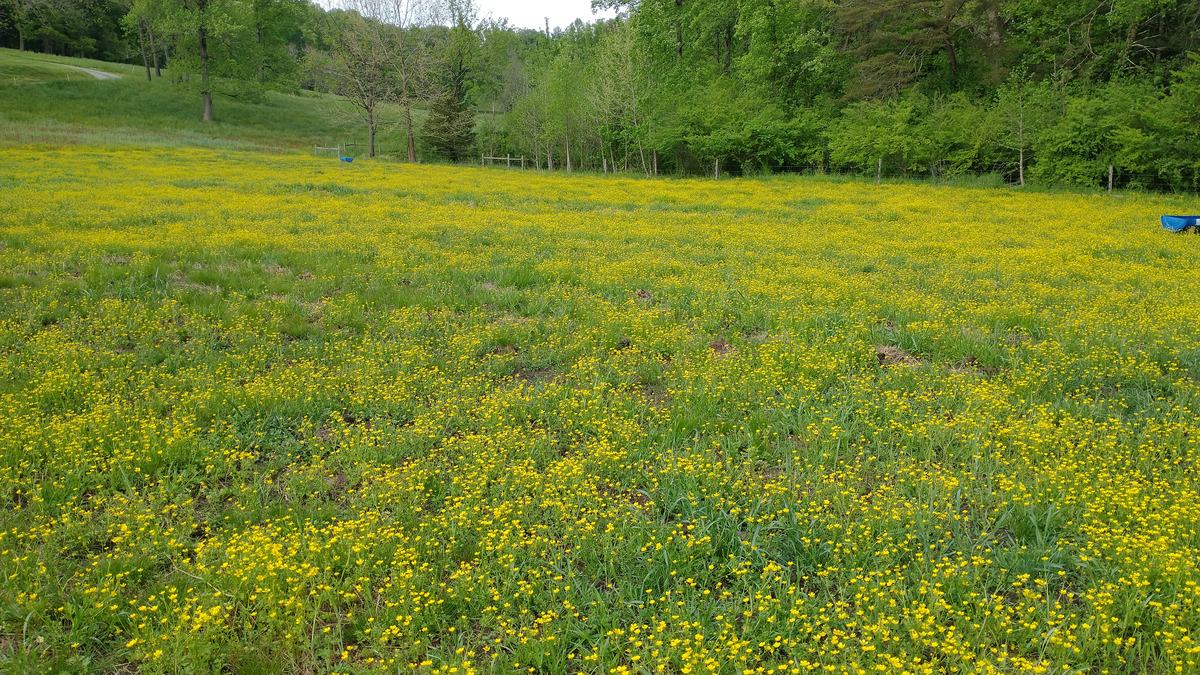
Cattle and horses will not willingly consume buttercups. If animals do not have another option, they will eat this toxic plant. When buttercup makes up a significant portion of the diet, it can cause blistering of the mouth and skin, swelling of the lips, and colic in horses. Cattle can also develop gastrointestinal irritation when grazing buttercup. If consumed in very large quantities, buttercup can cause convulsions and death in both horses and cattle. Buttercup’s toxins volatilize when dried, so it is much less toxic in hay.
Buttercups are winter annuals. Annuals grow from seed each year. Winter annuals sprout in the fall, grow in the winter, and flower in the spring. The flowers turn to seed before the plant dies in the heat of the summer.
When pastures are grazed short in the fall, it exposes the soil surface to sunlight. Exposing the soil surface to sunlight is essential for buttercup seed to germinate. If the soil surface is not exposed to sunlight, the buttercup seeds do not germinate. Ideally, there should always be enough forage to keep pasture soils covered. However, conditions are not always ideal. It seems there is either too much rain or not enough. Last fall, there was not enough rain for good pasture growth. As a result of little rain, many pastures were over grazed. These overgrazed pastures likely have an abundance of buttercups.
The good thing is it only takes a few moments to scout pastures for buttercup. Once you learn to recognize the unique leaf shape of this plant, it stands out almost as much as the bright yellow flowers.
I recommend treating pastures if there is one buttercup plant per square yard. The broadleaf weed killer 2,4-D Ester does a great job controlling buttercups before they bloom in January and February. 2,4-D Ester can be mixed with most liquid fertilizers or just applied with water. For best control, apply after daytime high has been 50° F or higher for two consecutive days. Adding a non-ionic surfactant, sometimes called soap, will also improve the herbicide’s effectiveness. Timing is key. Once buttercups begin to bloom, herbicides are much less effective.
An effective weed control program is essential for productive pastures. The old adage “an ounce of prevention is worth a pound of cure” is true for pastures. Proper soil pH and soil nutrition are important for healthy productive pastures. However, the most common problem with pastures in Caldwell County is overgrazing. Overgrazing leads to weed problems and greatly reduced pasture productivity. As Jeff Foxworthy would say, “ If you have yellow pastures . . . here’s your sign”.
# # #
-- Seth Nagy is the Caldwell County Cooperative Extension director. The Caldwell County Cooperative Extension Center, 120 Hospital Ave. NE, #1 in Lenoir, provides access to resources of N.C. State University and N.C. A&T State University through educational programs and publications.
Join our mailing list!
Enter your email address to receive updates.
Written By